-
01
2024-11
Chapter on Large scale Energy Storage in Western Regions.
The 600MWH photovoltaic energy storage project in Jiashi, Xinjiang, improves power generation efficiency and stability through photovoltaic energy distribution and storage. The annual power generation is 1.04 billion kilowatt hours, and the annual carbon dioxide reduction is 812000 tons.The 140MWh complementary project of animal husbandry and light in Bachu, Xinjiang, integrates "light storage+modern animal husbandry" organically and applies solar power generation to the breeding and animal husbandry process.The 150MWh photovoltaic energy storage project in Jimsar, Xinjiang, integrates photovoltaic energy storage and protects desert oases, effectively solving the problem of unstable energy storage and power supply in desert areas.Sichuan Kangding 4300 meter altitude photovoltaic off grid energy storage project aims to address the instability and vulnerability of power supply in high-altitude areas.High safety, long cycle, high energy efficiency.Energy guardians in various complex environments.Assist in the integration of light and energy storage in border towns, and write a new chapter in energy.

-
18
2024-10
Reasons and Effects of Gas Generation in Lithium Batteries
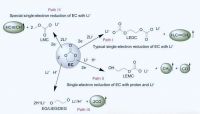
IntroductionLithium batteries may produce gas during use. If too much gas is produced, it not only affects battery performance but may also cause safety issues. Therefore, it is of great practical significance to conduct in-depth research on the causes and impacts of gas production in lithium batteries, and to take effective preventive and improvement measures. The reason for excessive gas production in lithium batteries 1. When the battery is overcharged, lithium ions are excessively embedded in the negative electrode, which may lead to electrolyte decomposition and gas production. Overcharging can increase the internal pressure of the battery, affecting its stability and safety. 2. Excessive deep discharge can damage the structure of the negative electrode material, resulting in the generation of gas. Overdischarging can reduce the capacity and lifespan of the battery, while also increasing safety risks. 3. High temperature environments can accelerate internal chemical reactions in batteries, leading to electrolyte decomposition and gas generation. High temperatures can also affect the performance and lifespan of batteries, and may even cause thermal runaway. 4. Internal short circuits in batteries can cause high currents, resulting in the generation of a large amount of heat and gas. Internal short circuits may be caused by manufacturing defects, impurities, or mechanical damage. 5. As the battery ages, the internal materials of the battery may gradually decompose and produce gases. Aging of batteries can reduce their performance and lifespan, and increase safety hazards. 6. Defects in the manufacturing process of batteries, such as impurities, micro short circuits, etc., may also lead to gas generation. Manufacturing defects can affect the quality and reliability of batteries. The impact of excessive gas production in lithium batteries 1. It will affect battery performance. Excessive gas production can lead to an increase in internal pressure of the battery, which may damage the sealing structure of the battery and cause electrolyte leakage, thereby reducing the capacity and cycle life of the battery. In addition, the generation of gas can also affect the internal resistance and charge discharge efficiency of the battery. 2. If the internal pressure of the battery is too high, it may cause the safety valve to open, and even lead to safety accidents such as explosions and fires. Meanwhile, harmful substances in gases may also pose a threat to human health and the environment. Preventive and Improvement Measures 1. Optimize Charging Strategy ① Using an intelligent charger can monitor the battery status and prevent overcharging. The intelligent charger can automatically adjust the charging current and voltage based on parameters such as battery voltage, current, and temperature, ensuring that the battery is charged within a safe range. ② When the battery is close to being fully charged, reduce the charging current. Trickle charging can reduce the decomposition of electrolyte and lower the risk of gas production. 2. Set the minimum discharge voltage threshold for the battery to avoid excessive discharge. In the battery management system, an over discharge protection function can be set, which automatically cuts off the circuit when the battery voltage is below the set threshold to prevent the battery from continuing to discharge. 3. Temperature control ① In the design and use of batteries, heat dissipation measures should be considered, such as using heat sinks, fans, etc., to effectively reduce the temperature of the battery, minimize the decomposition of electrolyte, and reduce gas generation. ② High temperature environments can accelerate battery aging and gas production, so it is advisable to avoid using and storing batteries in high-temperature environments as much as possible. 4. Optimization of Battery Management System ① Adopting advanced Battery Management System (BMS) to monitor battery status and adjust working conditions in a timely manner. BMS can monitor real-time parameters such as voltage, current, temperature, and internal resistance of the battery, adjust the battery's charging and discharging strategies based on these parameters, and ensure that the battery operates within a safe range. ② BMS should have overcharge, overdischarge, and overheat protection functions. When there is an abnormal situation with the battery, BMS can promptly cut off the circuit to protect the safety of the battery. 5. Regular maintenance and inspection① Through regular inspections, abnormal conditions of the battery can be detected in a timely manner and corresponding measures can be taken to deal with them. ② If abnormal conditions such as excessive gas production, decreased capacity, and increased internal resistance are found in the battery, timely maintenance or replacement should be carried out to ensure the safety and performance of the battery. 6. Choose electrolytes and electrode materials with good electrochemical stability. High quality electrolyte and electrode materials can improve the performance and safety of batteries, and reduce the risk of gas production. 7. When designing batteries for safety, pressure relief devices such as safety valves should be considered to prevent excessive internal pressure. ConclusionThe generation of gas during the use of lithium batteries is a complex problem, which involves multiple factors such as overcharging, overdischarging, high temperature, internal short circuit, battery aging, and manufacturing defects. Excessive gas production can have a serious impact on battery performance and safety. In order to effectively reduce gas production in lithium batteries, extend battery life, and ensure safe use, a series of preventive and improvement measures need to be taken, including optimizing charging strategies, preventing over discharge, temperature control, optimizing battery management systems, improving manufacturing quality, regular maintenance and inspection, using high-quality materials, and safety design.
-
26
2024-09
Our New LFP cells Polar series can be charged at -30℃!
New Polar series battery cells is ready for the market! It's specifically designed for low-temperature working condition.It can be charged even in -30℃ environments supported by LTSC low-temperature superconducting technology.And not only does it perform well in low-temperature environments, but it can also be used normally at a temperature of 60℃! The operating environment temperature of the battery cell spans 90℃. Powered by self-healing SEI film technology, which can minimize losses during use and has a long service life of over 5000 cycles, enough for users to use for 15 years. The cells passed thermal runaway test and has excellent safety performance. There are three cells 50/72/100Ah.Be Power is committed to providing customers with high-quality and customized solutions;We are the number one Chinese battery supplier delivered to automotive OEM in Brazil.We offered battery for over 800K set HESS systems;Our battery systems are warmly welcomed in over 30 countries applied on electric trucks,electric light vehicles,electric UTV, electric sweepers, container energy storage systems, 215Kwh commercial and industrial energy storage systems etc. With top-notch technical team in China we are providing the toughest technical and highest level safety products.For any request pls feel free to contact us!

-
13
2024-09
Fun talk about the charging and discharging principles of batteries
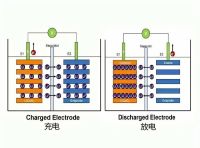
When we talk about batteries, we are actually discussing a magical chemical process - the principle of battery charging and discharging. This process may seem simple, but it contains rich scientific knowledge that not only affects various aspects of our daily lives, but also serves as a key driving force in the era of new energy. Today, we will explore the secrets of battery charging and discharging in a simple and understandable way.The key to battery charging: the secret of chemical reactionsThe 'magic' of batteries: electrochemical reactionsSimply put, battery charging is a process of storing energy. Imagine a battery is like a kettle, and when charging, it's the process of pouring water into the kettle. The 'water' here is actually electrical energy that enters the battery through a charger. From a more professional perspective, the energy storage inside the battery is achieved through chemical reactions. When you charge a battery, the electrical energy drives the chemical substances inside the battery to react, which converts the electrical energy into chemical energy and stores it in the battery.Charging process: Under the action of external voltage, the electrons of the positive electrode material are forcibly snatched and reach the negative electrode material through the external circuit. At this point, the positive electrode material loses electrons and becomes positively charged and unstable, causing lithium (sodium) ions to be deintercalated through the electrolyte and continuously reach and embed in the negative electrode material to neutralize electrons. After saturation, the charging process is completed.The Magic of Battery Discharge: The Release of EnergyWhen the battery is charged and the energy recipient (such as a mobile phone or electric vehicle) needs electricity, the battery enters discharge mode. The process of discharging is like pouring water out of a kettle, releasing stored energy. At this point, the metal ions that originally lost electrons at the positive electrode will "go home" through the electrolyte and recombine into metal, while the metal ions at the negative electrode will release electrons and be transmitted to the receiver through the circuit.Discharge process: When the external circuit is connected, due to the unstable crystal structure of the negative electrode, lithium ions quickly detach and continuously return to the positive electrode through the electrolyte. At this point, electrons are driven from the negative electrode through an external circuit to reach the positive electrode and neutralize lithium ions, thus forming an electric current.The process of charging and discharging can be vividly described using the "rocking chair" model. In this model, the positive and negative electrodes of the battery are like the two ends of a rocking chair, which constantly swings back and forth during the charging and discharging process.During the discharge process, the chemical substances inside the battery will gradually be consumed. In this way, when the battery runs out of power, it's like the water in a kettle has already been emptied, and the 'magic' of the battery comes to an end. However, by replacing the battery or charging it, this process can cycle back and forth, providing a continuous source of power for our lives.
-
14
2024-08
Introduction to Lithium Battery Management System (BMS)
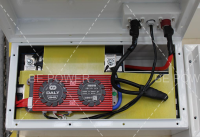
The performance and safety of lithium batteries are affected by various factors, such as the charging and discharging process, temperature changes, battery aging, etc. In order to ensure the safe, stable, and efficient operation of battery packs, Battery Management Systems (BMS) have emerged. This article will briefly introduce the functions, working principles, application areas, and future development trends of BMS. 1. Functions of BMS Battery status monitoring: Real time monitoring of parameters such as voltage, current, temperature, State of Charge (SOC), State of Health (SOH) of the battery pack, providing data support for subsequent control and management. Charge and discharge control: Control the charging and discharging process of the battery based on its status and user needs, ensuring that the battery operates within a safe range and extending its lifespan. Temperature management: Monitor the temperature of the battery pack, control the battery temperature within an appropriate range through heat dissipation or heating, and improve battery performance and safety. Balance control: Balance the power of each individual battery in the battery pack to avoid overcharging or overdischarging, and improve the overall performance and service life of the battery pack. Safety protection: When the battery experiences abnormal conditions such as overvoltage, overcurrent, overheating, etc., the BMS will promptly take protective measures, such as cutting off the charging and discharging circuit, issuing alarms, etc., to ensure the safety of the battery and system. Data recording and analysis: Record the operating data of the battery, such as charging and discharging times, SOC changes, temperature changes, etc., and analyze these data to provide a basis for battery maintenance and management. Communication interface: Communicate with external devices such as vehicle controllers, charging stations, etc., to achieve information exchange and collaborative work. 2. Working principle of BMS The working principle of BMS is based on real-time monitoring of battery status and intelligent algorithm processing. It continuously monitors the key parameters of each individual battery in the battery pack through a series of sensors, and collects and transmits this data in real time to the Central Control Unit (CCU). The CCU processes and analyzes this data according to preset algorithms and strategies, judges the status of the battery, and makes corresponding control decisions. For example, when the battery SOC is low, the CCU will control the charger to charge the battery; When the battery temperature is too high, CCU will control the cooling system to dissipate heat from the battery. 3. Application areas of BMS Electric vehicles: BMS is one of the core components of electric vehicles, responsible for monitoring and controlling the status of the battery, ensuring its safe use and extending its service life. BMS can achieve functions such as balanced charging, temperature control, and charging protection for batteries, thereby improving their efficiency and safety performance. Energy storage system: An energy storage system is a device that stores electrical energy for future use, such as solar energy storage systems, wind energy storage systems, etc. BMS plays a crucial role in energy storage systems, ensuring the safe, stable, and efficient operation of battery packs, and improving the reliability and economy of energy storage systems. Aerospace: The aerospace industry has extremely high requirements for the performance and safety of batteries. BMS can monitor the status of batteries in real time to ensure their safe operation in extreme environments. In addition, BMS can also perform balanced charging and discharging of batteries, improving their service life. Other fields: BMS is also widely used in electric bicycles, power tools, smartphones and other fields, providing reliable power management solutions for these devices. 4. Future Development Trends of BMS Intelligence: With the continuous development of artificial intelligence and big data technology, BMS will become more intelligent. By analyzing and learning historical data of batteries, predict their performance and lifespan, and implement corresponding control and management based on the predicted results. Efficiency: BMS will continuously improve its own efficiency and reduce energy loss. For example, adopting more advanced power devices and control algorithms to improve charging and discharging efficiency; Optimize battery balancing control strategy to reduce balancing time and energy loss. Security: BMS will pay more attention to improving safety performance and adopt multiple safety protection measures to ensure the safe operation of batteries in various situations. In addition, BMS will strengthen its collaborative work with other security systems to enhance the overall security of the system. Integration: BMS will be integrated with other systems to achieve more complex functions. For example, integrating with the vehicle controller to achieve optimized control of the vehicle power system; Integrate with charging stations to achieve more efficient charging management. Standardization: With the continuous expansion of BMS applications, standardization will become an inevitable trend. Developing a unified BMS standard can improve product compatibility and interchangeability, reduce production costs, and promote healthy market development.Be Power is committed to providing customers with high-quality and customized solutions;We are the number one Chinese battery supplier delivered to automotive OEM in Brazil.We offered battery for over 800K set HESS systems;Our battery systems are warmly welcomed in over 30 countries applied on electric trucks,electric light vehicles,electric UTV, electric sweepers, container energy storage systems, 215Kwh commercial and industrial energy storage systems etc. With top-notch technical team in China we are providing the toughest technical and highest level safety products.
-
31
2024-07
The difference in safety between lithium iron and ternary lithium batteries.
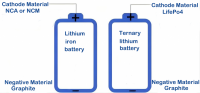
Lithium iron batteries and ternary lithium batteries, as the current mainstream power batteries, have attracted much attention to their safety issues. Understanding their differences in safety is of great significance for improving the safety of new energy vehicles, optimizing the application of battery technology, and promoting the sustainable development of the industry. 1. Chemical properties and safety of battery materials.① Lithium iron battery.The positive electrode material of lithium iron batteries is lithium iron phosphate, which has stable chemical properties. During the charging and discharging process, the structure of lithium iron batteries is relatively stable, less prone to phase transition, and has good thermal stability, which makes it less prone to thermal runaway in high temperature environments.② Ternary lithium battery.The positive electrode material of ternary lithium batteries is usually composed of nickel cobalt manganese (or nickel cobalt aluminum). Due to the characteristics of its material, ternary lithium batteries have a high energy density, but during the charging and discharging process, they are prone to phase transition, have poor thermal stability, and are relatively more prone to thermal runaway. 2. The Impact of Battery Management System (BMS) on Safety① The Importance of BMS.The battery management system plays a crucial role in ensuring battery safety. It can monitor the voltage, current, temperature and other parameters of the battery in real time, evaluate and control the status of the battery, and avoid overcharging, overdischarging, overheating and other situations.② Differences in BMS between lithium iron batteries and ternary lithium batteries.Due to the different chemical characteristics of lithium iron batteries and ternary lithium batteries, there are also differences in the requirements for BMS. Ternary lithium batteries require higher precision and response speed from BMS to ensure their safety. 3. Battery pack design, thermal protection measures, and safety. ① Battery pack design.Reasonable battery pack design can improve the safety of batteries. Including the design of battery arrangement, structural strength, and other aspects.② Thermal protection measures.The use of effective thermal protection materials and heat dissipation structures in battery packs can reduce the temperature of the battery during operation and minimize the risk of thermal runaway.For lithium iron batteries, due to their good thermal stability, the requirements for thermal protection measures are relatively low; and ternary lithium batteries require stricter thermal protection measures. 4. Statistical analysis of safety accidents.According to relevant data statistics, over 80% of new energy vehicle fire accidents use ternary lithium batteries, while the accident rate of lithium iron batteries is relatively low. This data intuitively reflects the safety differences between the two types of batteries in practical applications. 5. Security considerations in market applications.① Ternary lithium batteryDue to its ability to provide longer range, it is suitable for medium to high range vehicles. More attention should be paid to security management in applications to ensure the safety of users' use.② Lithium iron batteryLow cost and good safety, suitable for mid to low range vehicles. In market applications, its stability advantage has been demonstrated to some extent. 6. The comprehensive impact of cost and performance on security.① Cost factors.Lithium iron batteries have a lower cost, which gives them an advantage in some cost sensitive application scenarios. However, lower cost does not mean that its safety can be ignored.② Performance factors.Although ternary lithium batteries have higher costs, they provide stronger energy density. While pursuing high performance, it is necessary to ensure its security through technological means and management measures. 7. Seeking the optimal balance between materials and management systems.In order to achieve optimal safety and performance of batteries, it is necessary to find the best balance between the selection of battery materials and the design of battery management systems. We need to fully leverage the performance advantages of battery materials while controlling potential safety risks through effective management systems. Be Power is committed to providing customers with high-quality and customized solutions;We are the number one Chinese battery supplier delivered to automotive OEM in Brazil.We offered battery for over 800K set HESS systems.Our battery systems are warmly welcomed in over 30 countries applied on electric trucks,electric light vehicles,electric UTV, electric sweepers, container energy storage systems, 215Kwh commercial and industrial energy storage systems etc. With top-notch technical team in China we are providing the toughest technical and highest level safety products.
-
19
2024-07
Understand the composition of energy storage system in a short time
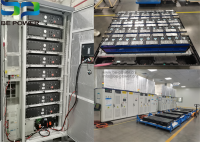
In layman's terms, the role of a battery energy storage system is to store electrical energy and release it when needed. Large-scale energy storage systems can serve the power grid, which is called grid-side energy storage. For example, when power generation is greater than power consumption, it is first stored and then released when power consumption is tight, which is commonly known as "peak shifting and valley filling." Why PCS is neededBatteries generate electricity through chemical reactions, which produce direct current with a constant current direction, while the power grid transmits alternating current with a direction that changes at a certain frequency. Therefore, in the scenario of grid-side energy storage, charging and discharging batteries requires a conversion device, namely PCS, which can rectify the AC power of the grid into the DC power required by the battery when charging the battery, and can invert the DC power of the battery into the AC power required by the grid when discharging. Why BMS is neededSince the electric energy generated by the battery is through chemical reactions, we need to control the speed and stability of the reaction to ensure that the reaction can proceed stably and continuously. Therefore, it is necessary to manage and monitor the voltage, current, temperature, etc. of the battery. In addition, the battery cannot be overcharged or discharged, otherwise it is easy to explode and damage, so it is necessary to know the remaining power (SoC) of the battery. The system needs to monitor the Soc at all times to ensure that the battery is charged and discharged within a safe range, and it is necessary to evaluate the battery's state of health (SoH) to know when the battery should be maintained or replaced. In addition, the power and storage capacity of a single battery are limited. Large-scale energy storage requires single batteries to be connected in series or in parallel to provide the corresponding power and capacity. However, the SoC of each battery may be different. We call the low SoC a lagging battery. The capacity of the system will be restricted by the lagging battery, which is called the "barrel effect". In order to improve the working efficiency of the system, it is best to keep the consistency of the SoC of each battery as much as possible when charging and discharging the modules or monomers that make up the battery pack, which is the so-called "balance". This requires a measurement and control system, usually called a battery management system (BMS) Why EMS is neededAs the scale of batteries increases, people hope to remotely monitor the status of batteries, PCS and other electrical equipment, and also hope to remotely control them, including controlling when to charge and discharge batteries according to certain strategies. This requires a system similar to the human brain, which can analyze the collected data and make corresponding decisions according to certain strategies. This system is the energy management system (EMS). Therefore, taking lithium batteries as an example, the composition of a lithium battery energy storage system mainly includes battery packs, PCS, BMS, EMS and other electrical equipment. Be Power is committed to providing customers with high-quality and customized solutions;We are the number one Chinese battery supplier delivered to automotive OEM in Brazil.We offered battery for over 800K set HESS systems;Our battery systems are warmly welcomed in over 30 countries applied on electric trucks,electric light vehicles,electric UTV, electric sweepers, container energy storage systems, 215Kwh commercial and industrial energy storage systems etc. With top-notch technical team in China we are providing the toughest technical and highest level safety products.
-
20
2024-06
CATL and BYD compete for supercharging, and power batteries will enter the 6C era.
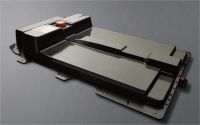
CATL plans to launch the second-generation product of Kirin Battery in the second half of the year - a power battery with a charging rate of 6C. At the same time, BYD, which has not released a new battery product for three years, is also considering launching fast charging battery products: sources close to BYD have revealed that BYD's second-generation blade battery may be launched in the second half of this year, and BYD's 6C battery is also under development."C" refers to the charging rate. In theory, the power battery supports a "few C" charging rate, which means it can be fully charged within a few minutes of an hour. In the actual charging process, the peak rate is generally used as the standard - the maximum peak rate during the charging process can reach "several C", which is called "several C supercharging". From the launch of 3C in 2022 to the launch of 4C and 5C in 2023, electric vehicles are now entering the era of 6C. This means that manufacturers not only need to start improving at the level of battery cell materials, but also need to upgrade at the level of battery systems. In terms of materials, fast charging batteries not only need to be paired with fast charging graphite, electrolytes suitable for fast charging, separators and other materials, but also can mix and match basic lithium iron materials with NMC materials to balance performance. We have currently launched pure iron lithium 6C batteries and are in mass production! Pure iron lithium batteries are relatively safer and more stable, and also have better performance.Be Power is committed to providing customers with high-quality and customized solutions;We are the number one Chinese battery supplier delivered to automotive OEM in Brazil.We offered battery for over 800K set HESS systems; Our battery systems are warmly welcomed in over 30 countries applied on electric trucks,electric light vehicles,electric UTV, electric sweepers, container energy storage systems, 215Kwh commercial and industrial energy storage systems etc. With top-notch technical team in China we are providing the toughest technical and highest level safety products.
-
14
2024-06
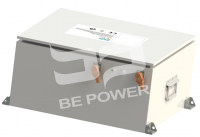
Application case:51.2V 206Ah 10.547Kwh
Product images: Specification: Product Introduction: Customized for last mile delivery. Extra long range, ensuring worry free last mile delivery. The benefits of our batteries don’t stop at efficiency; they also offer fast charging, zero maintenance, a long lifespan, light weight, eco-friendly, safety, and stability in all weather conditions. We also offer custom-tailored solutions and fast transportation. Company Introduction: Be Power is committed to providing customers with high-quality and customized solutions;We are the number one Chinese battery supplier delivered to automotive OEM in Brazil.We offered battery for over 800K set HESS systems; Our battery systems are warmly welcomed in over 30 countries applied on electricTrucks,electric light vehicles,electric UTV, electric sweepers, container energy storage systems, 215Kwh commercial and industrial energy storage systems etc. With top-notch technical team in China we are providing the toughest technical and highest level safety products.
-
11
2024-06
Application case:51.2V 420Ah 21.5Kwh
Product images: Specification: Product Introduction: This battery system is a customized product with two battery boxes and the PDU is integrated into one of the boxes. We have saved space on PDU, which is more perfect for customers with limited space. Bulk sales to over 30 countries.Company Introduction: Be Power is committed to providing customers with high-quality and customized solutions;We are the number one Chinese battery supplier delivered to automotive OEM in Brazil.We offered battery for over 800K set HESS systems; Our battery systems are warmly welcomed in over 30 countries applied on electric trucks,electric light vehicles,electric UTV, electric sweepers, container energy storage systems, 215Kwh commercial and industrial energy storage systems etc. With top-notch technical team in China we are providing the toughest technical and highest level safety products.