Introduction to Power Battery BMS
 Release time:2026-04-29
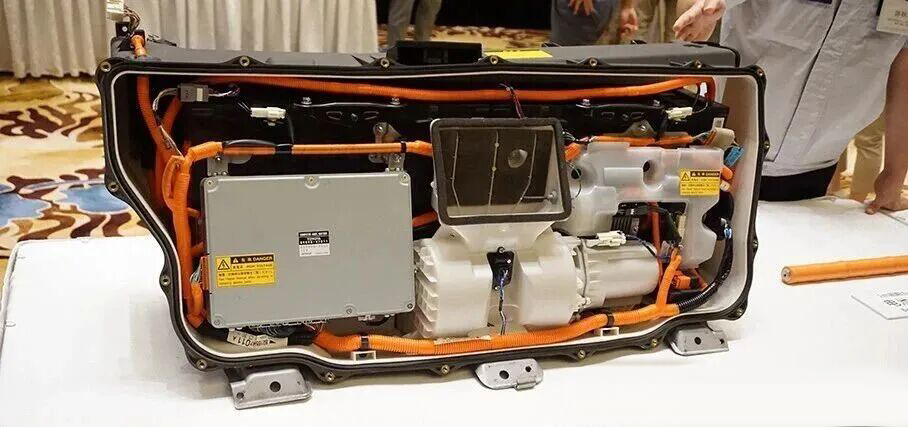
BMS, the abbreviation of Battery Management System, as the name suggests, is mainly responsible for managing batteries in new energy vehicles, including monitoring and regulating batteries, ensuring that batteries work in the best state, preventing overcharging or overdischarging, enabling battery performance to be fully utilized, and extending battery cycle life.
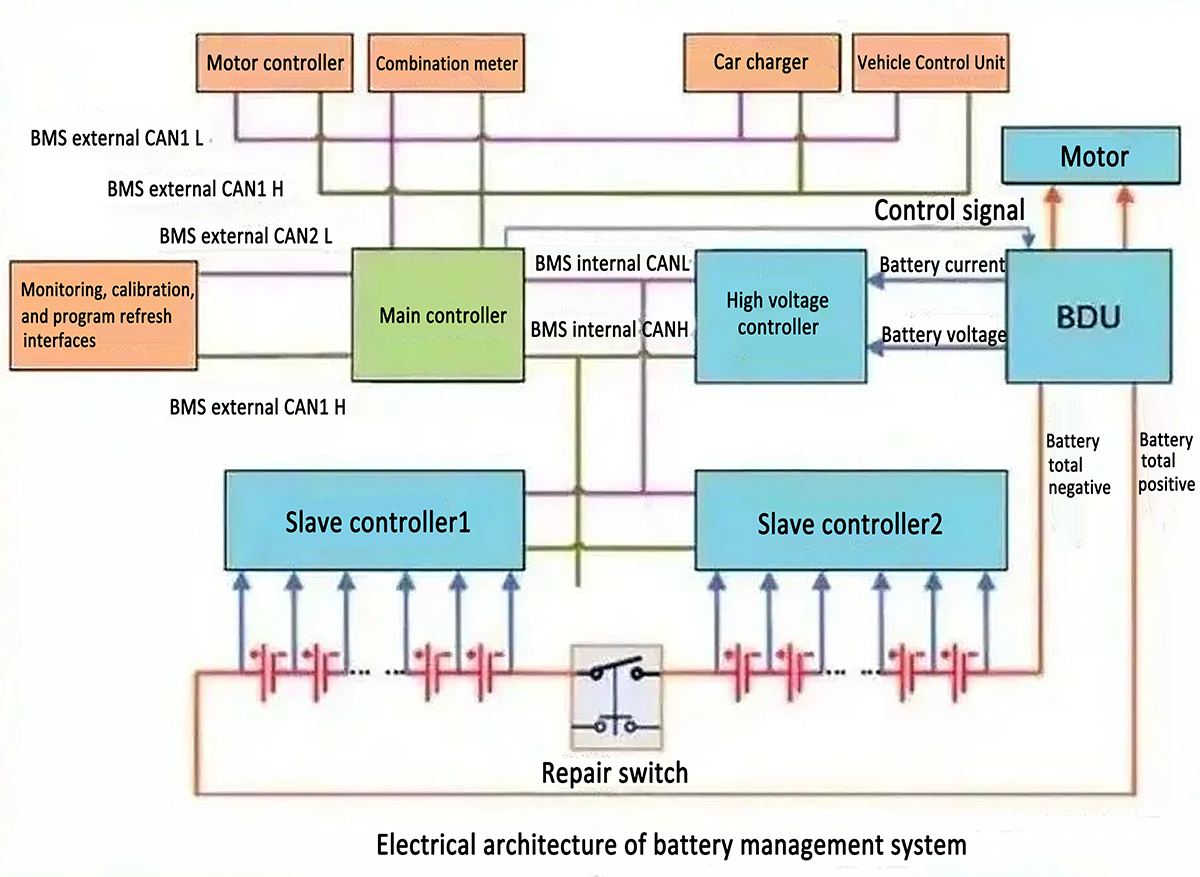
In power battery systems, BMS is usually divided into centralized, distributed, master-slave, and modular types, each with its own advantages and disadvantages:
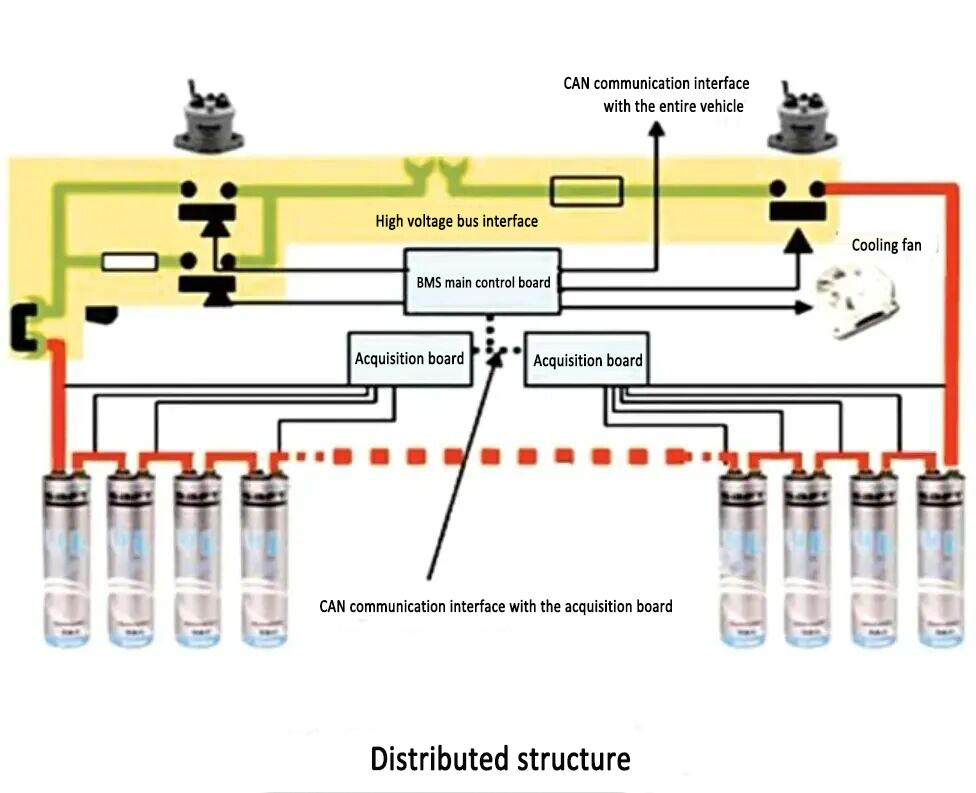
1. Distributed
Distributed BMS is mainly designed for high-voltage power battery packs. Its core feature is that through a distributed architecture, electronic devices are directly installed on the circuit board near the battery cells, reducing the use of connecting wires and achieving refined management and high reliability. It is mainly divided into three components: BCU, BMU, and BAU, among which:
BCU: The main control unit is mainly responsible for high-voltage management, fault diagnosis, and balancing strategies.
BMU: The control unit is mainly responsible for collecting real-time data such as voltage and temperature and providing feedback for balanced control.
BAU: Central controller. Coordinate the overall situation, coordinate charging and discharging strategies, thermal management, and safety protection.
Advantages: Less use of wiring harness, strong reliability;
Disadvantage: The cost is relatively high.
2. Centralized
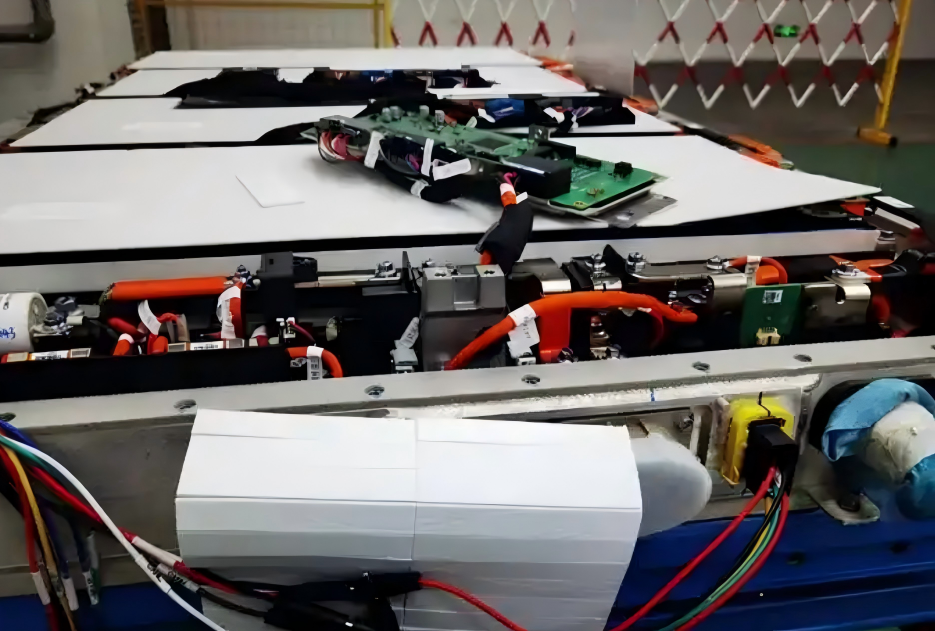
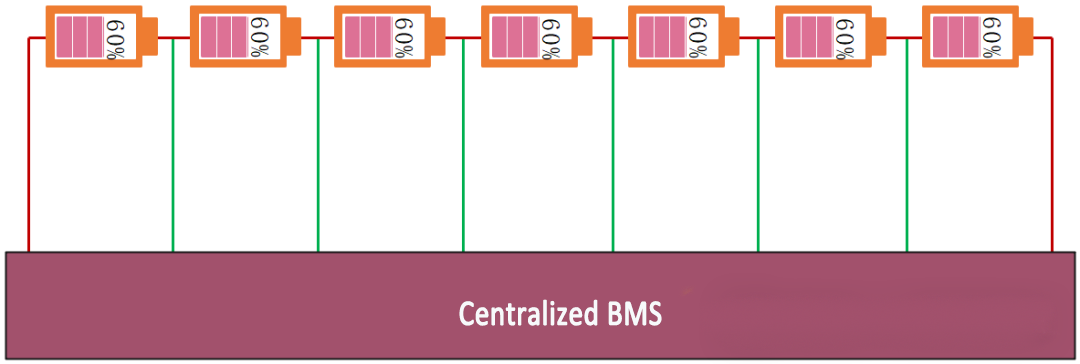
Centralized BMS integrates the entire system together and then leads out signal acquisition lines for voltage, current, temperature, etc., making the structure more compact. The advantages are low cost and reliable signal transmission, but at the same time, it also brings disadvantages such as long wiring harness and poor scalability.
Advantages: Low cost, simple and reliable structure;
Disadvantages: Poor scalability and unsuitable for use in high-voltage systems.
3. Master-slave style
The master-slave BMS adopts an architecture design where the master control module and slave modules work together. The master module is responsible for global computation, control strategy formulation, and communication with the car, such as battery level, battery health, etc. Collect individual voltage and temperature signals from the module, and transmit the data to the main module through CAN bus or SPI daisy chain.
Advantages: Low cost, easy to maintain, strong scalability;
Disadvantages: Idle main module resources and delayed communication between master and slave modules.
4. Modular BMS
Modular BMS divides BMS into multiple modules for coordinated work, similar to master-slave modules but with significant differences. Each module contains an independent monitoring and control unit, while the main control module serves as a coordinating management.
Advantages: Balancing performance and cost, easy maintenance, and strong scalability;
Disadvantages: Complex design and high cost.
In summary, each BMS introduced above has its own advantages and disadvantages. Considering various factors such as applicable scenarios and costs, different enterprises may adopt different BMS designs.