-
05
2024-01
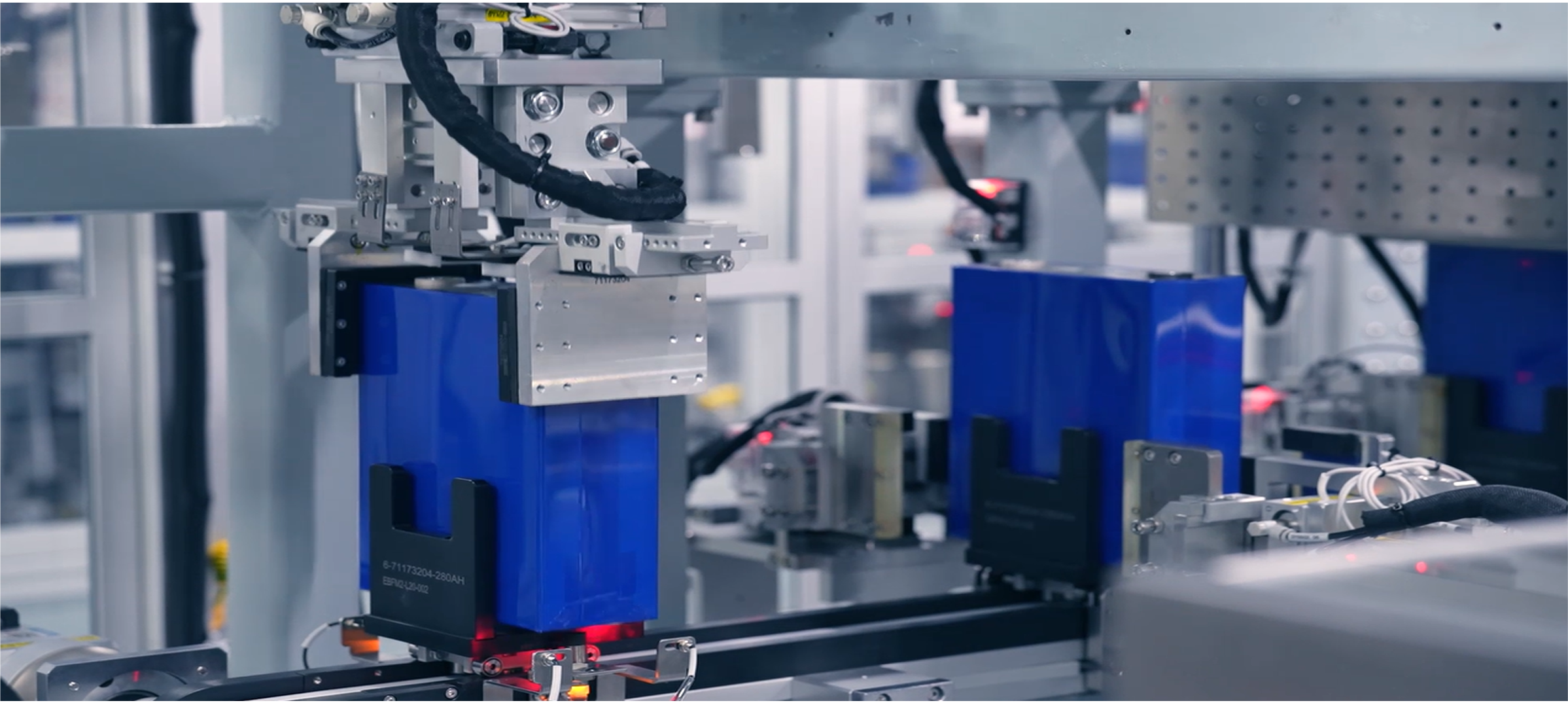
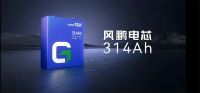
Great Power's first batch of 314Ah battery cells has been successfully produced globally.
With the popularization of renewable energy and the rapid development of distributed energy systems, energy storage technology is increasingly receiving global attention. According to data from GGII, the penetration rate of 280Ah battery products in China's power storage projects has exceeded 80% in 2022. In the second half of 2023, most energy storage companies will launch high-capacity battery cells with a capacity of 300+Ah or more, and achieve mass production and delivery, officially launching a race for high-capacity battery cells. However, Ouyang Minggao, an academician of the CAS Member, mentioned that the 300+Ah high-capacity lithium iron phosphate energy storage cell has certain hidden dangers in intrinsic safety. The safety accidents of energy storage power stations that occurred in many parts of the world this year have once again attracted people's attention. In the field of energy storage, the safety performance of battery cells has become the foundation of all performance. Great Power's 314Ah large energy storage cell, with its outstanding safety technology innovation, has set a new safety benchmark for the energy storage industry. This 314Ah large storage battery cell has excellent safety performance and has passed more than 20 safety regulations tests such as needle puncture, thermal runaway, impact, and injection. Moreover, it does not experience thermal runaway even under overcharge conditions. This 314Ah large storage battery cell has a stable system, safe and reliable quality, and meets certification requirements such as UL1943, UL9540A, IEC62619, UN38.3, ROHS&REACH, etc. In terms of materials, advanced nano coating technology is also adopted, greatly improving the strength of the electrode and separator, ensuring the stability of the battery. In addition, the realization of in-situ gel of electrolyte makes the 314Ah large storage core form a safe and stable interface between the positive and negative electrodes and electrolyte, effectively avoiding the occurrence of thermal runaway. The mass production of Great Power's 314Ah large storage battery cells has further promoted the development and application of 300Ah+large capacity battery cells in the industry, providing better battery cell solutions for large-scale energy storage scenarios.
-
30
2023-11
With our 150Ah LFP battery system, Third generation Wuling Hongguang MINIEV Macaron model with upgraded range and support for DC fast charging
On November 14th, the latest facelift of the Wuling Hongguang MINI EV - the third-generation macaron - was officially launched. The exterior design and cabin interior of the third-generation Macaron of the Hongguang MINIEV have been fully refreshed. On the basis of the original 120km and 170km range versions, this model has added a 215km long range version, with an average range of 12.4km per hour and a power consumption of 9kW · h per 100 kilometers. The newly added 215km long endurance version supports DC fast charging, which can charge from 30% to 80% in 35 minutes. In addition, the power of slow charging for communication has also been improved. The 215km long endurance version of the AC pile has a charging power of 3.3kW, which takes 5 hours to charge from 20% to 100%. The on-board charging gun can be matched with a 220V household socket power supply without the need for conversion. This can greatly improve the efficiency of charging MINI EV. The Wuling Hongguang MINI EV series uses our 150Ah LFP battery pack. The charging and discharging efficiency of lithium iron phosphate batteries is usually above 90%, which can be perfectly matched with the newly added fast charging function. Our Lifepo4 battery are currently widely used in the field of electric vehicles, especially in light vehicles, nearby vehicles, utility vehicle cases, UTV, sweeper and so on. We are proud to contribute our efforts in the field of clean energy. Lithium iron phosphate batteries do not contain any heavy metals or rare metals, are non-toxic, pollution-free, and comply with regulations. They are absolutely green and environmentally friendly batteries. Lead acid batteries contain a large amount of lead, which, if not properly disposed of after disposal, will cause secondary pollution to the environment. Lithium iron phosphate materials are pollution-free in both production and use.

-
30
2023-11
Powered by Bepower's battery pack,Wuling Hongguang MINI EV's global sales have exceeded 1.15 million vehicles!
Wuling Automobile announced on November 14th that the global sales of Wuling Hongguang MINI EV have exceeded 1.15 million units. As a leader in A00 level new energy vehicles, Wuling Hongguang MINI EV has won the championship of Chinese brand pure electric vehicles for 28 consecutive months. It has excellent cost-effectiveness and has become the first choice for many people's urban transportation. The Wuling Hongguang MINI EV is the fastest single new energy vehicle in the world to achieve one million sales, and has topped the global new energy single vehicle sales championship 7 times. In 2021 and 2022, it has won the global micro pure electric sales championship for two consecutive years. Not only in the domestic market, but currently, Wuling MINI EV has been exported to more than 40 countries and regions including Central and South America, the Middle East, Africa, and Southeast Asia. This product has even performed outstandingly in markets like Japan where car culture is prevalent, successfully surpassing the Toyota C+pod and becoming a dark horse in this niche market. The Wuling Hongguang MINI EV is a pure electric vehicle powered by lithium iron phosphate batteries. The total power of the electric motor is 20 kW and the total torque is 85 Nm. It uses our 150Ah LFP battery pack. The rated voltage of the power battery system is 109V, the peak power of the driving motor is 29kW, and the range can reach 200KM. This type of battery not only has high safety performance, but also has a long service life. Higher power provides an advantage in battery life compared to low-speed electric vehicles. Lifepo4 batteries currently have outstanding performance in multiple fields, such as sweepers, AGVs, UTVs, lawn mowers, electric vehicles, forklifts, etc., it plays an extremely important role in promoting the use of clean energy. As Wuling's first pure electric vehicle, the Hongguang MINI EV has embarked on a new path as a micro pure electric vehicle. With its outstanding product capabilities, it has created a new blank market and met the needs of all consumers from cities to towns. The Wuling Hongguang MINI EV surpassed the Tesla Model 3 in sales in January 2021, and now it has once again achieved a comeback against Tesla. We believe that the Wuling Hongguang MINI EV will once again lead the new generation trend with its cute appearance, ultra long battery life, and highly competitive price.

-
14
2023-08
Our partner Great power is the Top 2 Home energy storage battery supplier after CATL in 2022.
On February 9, 2023, the High tech Industry Research Institute officially released the ranking of 2022 household energy storage lithium battery enterprise shipments. According to GGII research and statistics, the total shipment amount energy storage lithium batteries from China in 2022 reached 130GWh, a year-on-year growth rate of 170%. Among them, household energy storage surged, with shipments reaching 25GWh, a year-on-year growth rate of more than three times. It is the segmented application field with the largest growth rate of energy storage, and Great Energy has become the top 2 enterprise in household energy storage shipments. The household energy storage market belongs to a typical C-end market, and end users not only consider product cost-effectiveness when choosing products, but also consider product lifespan, function, and brand as very important factors. Great Energy adopts a comprehensive strategy from cost, product, quality, brand, etc. In the development of household energy storage products, Great power adopts a comprehensive strategy starting from cost, product, quality, brand, etc. This is also one of the factors that Great power can perform well in the household energy storage market in 2022. S/N Module model Capacity Kwh Voltage Ah L mm W mm H mm 1 G34 2.56 25.6 100 350 227 141 2 G50 2.56 25.6 100 454 168 138 3 G39 2.56 51.2 50 391.4 303.6 112.4 4 G11 3.07 102.4 30 442 286 138 As an overseas partner of Great power, Bepower is committed to promoting the standard energy storage battery module, helping overseas home storage production enterprises reduce production costs, reducing electricity bills and energy conservation for European customers. Our colleagues in the European office are recognized by our clients for their professionalism and hard work. We will continue to strive to provide customers with reliable, high-performance, and cost-effective energy storage and EV battery pack products.
-
11
2023-08
The large-scale application of sodium batteries began, and Great Power Energy created the first 10MWh sodium battery energy storage power station
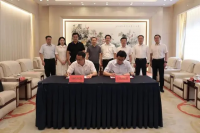
On the morning of July 14, Guangzhou Great Power Energy Technology Co., Ltd. and Qingdao North Shore Holding Group signed a cooperation agreement on a 5MW/10MWh sodium ion energy storage power station demonstration project. The large-scale application in northern energy storage power stations marks the official introduction of Great Power Energy's sodium ion batteries into the market and the entry into the stage of large-scale commercial application, which is of symbolic significance for the industrialization of sodium electricity. The 5MW/10MWh sodium ion energy storage power station project is located in Qingdao North Bank Holdings Big Data Center, which is the first fusion application of sodium ion batteries in new energy storage and new infrastructure of big data centers. This project will effectively improve the energy efficiency level of Qingdao North Bank Big Data Center, empower the construction of green data centers, and support the high-quality development of Qingdao City driven by digitalization. Three years ago, Great Power Energy deployed the technology in the field of sodium-ion battery research. Today, the company has achieved remarkable results in the fields of sodium-ion material system construction, supply chain cooperation, and product system research and development. In 2022, the batch trial production and sample delivery test of small cylindrical, large cylindrical, and square cells have been completed. At the same time, a number of invention patents related to sodium electricity have been applied for, and many research papers have been published in Top journals. In the 5MW/10MWh sodium ion energy storage power station demonstration project of Qingdao North Bank Holdings Big Data Center, Great Power Energy will provide a complete sodium ion technology solution to realize the construction and application of sodium ion cells in a new power load management system. The project not only effectively reduces the operating cost of the data center, but the Big Data Center of North Shore Holdings will also actively participate in the regulation of the social power grid to improve the stability and reliability of the social power grid. As Great Power's overseas partner, BePower Energy is committed to promoting square iron-lithium batteries and cylindrical batteries to overseas markets. In the future, we will officially launch sodium batteries in overseas markets to contribute to global clean energy.
-
05
2023-07
Chery QQ powered by sodium battery ready for sell in Q3 2023
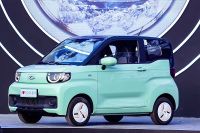
According to the latest opinion collection of the Ministry of Industry and Information Technology's Announcement on Road Motor Vehicle Manufacturers and Products (the 372nd batch), two of the first batch of new energy vehicles equipped with sodium batteries appeared in the product announcement catalogue, respectively from Chery New Energy Vehicles Co., Ltd. and CATL - Chery QQ ice cream and Jiangling Motors and Funeng Technology's joint cooperation model - Yichi Yutu. The product announcement can be understood as the production license of the vehicle, and only by registering the announcement can the relevant model be approved for production in the future. These two first models with sodium batteries are expected to enter the market in the third quarter and officially launch into market. According to the information on the website of the Ministry of Industry and Information Technology, the A00 class pure electric car announced by Chery New Energy has a maximum speed of 100 kilometers per hour, and the Sodium-ion battery is from the CATL. The publicly announced model of Jiangling New Energy is an A0 level pure electric sedan, belonging to the Yichi brand. The maximum speed of this model is also 100 kilometers per hour, and the Sodium-ion battery is from Funeng Technology. A00 level and A0 level are methods of dividing vehicle models based on vehicle wheelbase, also known as micro cars and small cars. Hua'an Securities quoted the research results of Zhongke Haina team, which showed that the cost of industrialized sodium battery materials could be reduced by 30% -40% compared with Lithium iron phosphate battery. Especially in the context of high cost of lithium materials, its cost advantage was further highlighted. It can be predicted that a large number of new energy vehicles will be equipped with Sodium-ion battery in the future. Compared with lithium batteries, the price of such batteries will be at least one third cheaper, or even more than half cheaper. Of course, compared with the current mainstream lithium phosphate battery, the energy density of Sodium-ion battery is not high, about 200 watt hours per kilogram, but it is much stronger in other aspects. The charging speed of sodium ion is the fastest among all batteries at present, and it only takes about 15 minutes from 0 to 80%. In addition, the power locking capacity of Sodium-ion battery is still as high as 90% at minus 20 degrees. 2023 will be the "first year" of Sodium-ion battery. Not only will the technical problems of batteries be gradually solved, but commercial mass production will also enter a new stage. First, the actual mass production capacity of battery manufacturers for Sodium-ion battery is being formed. CATL, BYD, Zhongke Haina, Huayang Co., Ltd., Penghui Energy, Dofluoro, Funeng Technology, Xinwangda, and Meilian New Material have publicly announced that the mass production capacity of Sodium-ion battery will be formed as soon as 2023. CATL released the first generation of Sodium-ion battery in 2021, and the energy density at that time was 160Wh/kg. At present, CATL sodium battery can generally meet the needs of vehicles with a range of less than 400km. Its latest AB battery system integration technology realizes the mixing and matching of sodium and lithium, complements each other's advantages, improves the energy density of the battery system, and makes Sodium-ion battery expected to expand to 500km endurance vehicles. This endurance model will target 65% of the market and has broad application prospects. According to the schedule of the CATL, the mass production of Sodium-ion battery will be realized in 2023. In April this year, the company announced that its Sodium-ion battery would be the first Chery model. At the same time, CATL will jointly launch the battery brand "ENER-Q" with Chery. On March 14, Chuanyi Technology said on the interactive platform that the company's Sodium-ion battery project was progressing smoothly. All the 4.5GWh mass production equipment in Phase I of the project had been installed in the factory, and the positive pole, negative pole, cell Technology roadmap and production process had been successfully verified. The company's Sodium-ion battery could be used in many fields such as A00 class cars, two wheeled vehicles and energy storage. On March 10, Dofluoro said on the investor interaction platform that the company's Sodium-ion battery products have been tested in many car factories, and the company has the first generation of layered oxide sodium electricity products in 2022, and will launch the second generation of layered oxide sodium electricity products and the first generation of polyanion sodium electricity products in 2023. On February 28th, Funeng Technology announced that the company had received the "EV3 sodium battery appointment letter" from Jiangxi Jiangling Group's new energy vehicles. The fixed-point letter shows that Jiangling Group will purchase Sodium-ion battery package assembly from the company and require the company to start mass production before June 30, 2023. At the general meeting of shareholders on May 22, GP Energy said that the number of cycles of Sodium-ion battery of the company's polyanion system has reached more than 6000, the Sodium-ion battery of the layered oxide system has been delivered to the vehicle factory for loading and testing, the sodium battery products without negative electrode materials are in continuous iterative optimization, and the development of positive electrode materials is also in normal progress. Previously, it was rumored that the product had been installed on the national brand Wuling Baojun Kiwi. The person in charge of Penghui Energy stated that the product still needs to be tested and verified by Wuling and has not been listed in the announcement catalog. Many enterprises have released the latest progress in mass production of Sodium-ion battery, and Sodium-ion battery are knocking on the door of industrialization.
-
24
2023-05
BePower Energy: The number of cycles of sodium-ion batteries has reached more than 6,000
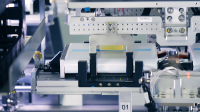
At present, the sodium ion battery of the polyanion system we have developed has reached more than 6,000 cycles, the sodium ion battery of the layered oxide system has been delivered to the car factory for loading and testing, and the research and development of the cathode material of the sodium battery is also proceeding smoothly. Continuous iterative optimization. Secondly, our production line is under construction and is expected to be put into operation in the third quarter of this year, and can contribute part of the production capacity in the fourth quarter. In addition, due to the sharp drop in the price of lithium carbonate, the production cost of lithium batteries has dropped, which will be beneficial to stimulate the electric vehicle industry. Moreover, as the price of the main raw materials for lithium batteries declines, the demand for lithium batteries will further increase in the future, and the market size is expected to continue to expand.
-
06
2023-05
BePower: Sodium batteries are at work
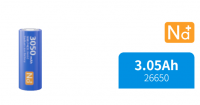
As a leading technology company, we have been committed to researching and developing the most dynamic and forward-looking technologies, constantly innovating, and providing customers with the best quality products and services. Sodium batteries are one of the most important areas of attention in the field of new energy storage. After years of research and development, a lot of money and manpower have been invested, our 26650 cylindrical 3.05Ah sodium-ion batteries have begun to work in batches. Basic Parameters Positive electrode type: layered oxide (NaNix Fey MnzO2 ) battery model: 26650R (diameter D=26.1±0.2mm, height H=64.9±0.3mm) Rated Capacity: 3.05 Ah voltage range2.0-4.0V High/Low Temperature Discharge Curve (4.0~0V) For more information about sodium batteries, welcome to contact us. Our future sodium battery products will bring you faster, more efficient and more reliable energy solutions. Whether it is electric vehicles, energy storage systems, etc., cost-effectiveness, safety, etc. will be significantly improved.
-
13
2023-03
How to improve the low temperature performance of lithium batteries
The low-temperature performance of lithium battery is one of the key factors that restrict the widespread use of lithium batteries. How to improve the low-temperature performance of lithium batteries is still a hot and difficult point of current research. The battery system reaction process mainly includes four steps: Li+ transport in the electrolyte, crossing the electrolyte/electrode interface membrane, charge transfer, and Li+ diffusion in the active material body. At low temperatures, the rate of each step decreases, which causes the impedance of each step to increase, which leads to aggravation of electrode polarization, and causes problems such as a decrease in low- temperature discharge capacity and lithium precipitation in the negative electrode. The poor low-temperature performance of lithium-ion batteries is mainly due to the following three factors: At low temperatures, the viscosity of the electrolyte increases, and the conductivity decreases; The electrolyte/electrode interface membrane impedance and charge transfer impedance increase; The migration rate of lithium ions in the active material body is reduced. As a result, the electrode polarization is increased at low temperatures and the charge and discharge capacity is reduced. The mainstream ways to improve the ion diffusion performance of cathode materials at low temperatures are as follows: Use materials with excellent conductivity to coat the active material body to improve the conductivity of the cathode material interface, reduce the interface impedance, and reduce the positive electrode material and the side reaction of the electrolyte stabilizes the material structure. The second is to do bulk-doping of the material body with Mn, Al, Cr, Mg, F and other elements to increase the layer spacing of the material to increase the diffusion rate of Li+ in the body, reduce the diffusion resistance of Li+, and increase the low temperature of the battery. performance. The third is to reduce the particle size of the material and shorten the Li+ migration path. It should be pointed out that this method will increase the specific surface area of the material and increase the side reaction with the electrolyte.
-
28
2022-10
Here's what you need to know about starting the battery
What is a starting battery The battery according to the purpose of classification, can be divided into starting battery, power battery and energy storage battery, power battery is common in E-bike, electric vehicle, electric boat, mainly to provide power for these tools; Starting batteries are used in oil-powered vehicles, such as cars, tractors, and motorcycles, to use high power to ignite internal combustion engines. The starting battery is different from the power battery The starting battery is applied to the starting of the vehicle, the discharge ability is strong, a short time can release more than 10C current, this characteristic determines its volume and capacity is lower than the power battery. The power battery mainly provides power for the vehicle, the maximum discharge current is not more than 1C, and can not be maintained for a long time, often at less than 0.5C power operation, and the battery life is long, because it needs to store more electricity, so the volume and capacity should be larger. The material of the starting battery At present, most of the starting batteries are lead-acid batteries, which is also a relatively large application field of lead-acid batteries. However, due to the gradual attention of environmental protection in various countries, the market for lead-acid starter batteries is gradually compressed, so it is feasible to use lithium iron phosphate batteries as starter batteries. By analyzing the various requirements for starting the battery, it is easy to draw conclusions. The use of lithium iron phosphate is feasible as long as it can meet the characteristics of small size, high discharge rate, and resistance to low and high temperatures. Compared with lead-acid batteries, using lithium iron phosphate starting batteries has the following advantages: However, the application of lithium iron phosphate starter battery in the market is limited at present, which may be related to the high initial investment cost of lithium iron phosphate battery. Another important reason is that users have been used to lead-acid battery, have not tried lithium iron phosphate starter battery, and cannot intuitively feel the advantages of lithium iron phosphate battery.