-
29
2024-05
Understanding the various parameters of lithium batteries: Easy selection of lithium batteries
Lithium batteries have been widely used in various fields. From smartphones, tablets to electric vehicles, lithium batteries are an indispensable source of energy. To ensure the stable and safe operation of lithium batteries, we need to understand and pay attention to their basic parameters. These parameters not only reflect the performance of lithium batteries, but also determine their applicability and service life. Here we will elaborate on the basic parameters of lithium batteries, providing a reference for your better understanding and use of lithium batteries. 1. Detailed explanation of basic parameters of lithium batteriesl Rated capacityRated capacity refers to the maximum amount of electricity that a lithium battery can provide under specific conditions, usually measured in milliampere hours (mAh) or ampere hours (Ah). This parameter reflects the battery's ability to store electricity and determines the length of time the battery can support device operation. When choosing a lithium battery, the required capacity should be determined based on the device's power consumption and expected usage time. l Rated voltageRated voltage refers to the voltage of a lithium battery at full charge, usually measured in volts (V). The rated voltage of lithium batteries is generally 3.7V or 4.2V, and different models of lithium batteries may vary. Understanding the rated voltage of the battery helps us choose the appropriate charger and electrical equipment to ensure that the battery can function properly. l Internal resistanceInternal resistance refers to the resistance inside a lithium battery, which affects the charging and discharging efficiency and heating situation of the battery. The smaller the internal resistance, the higher the charging and discharging efficiency of the battery, and the smaller the heat generated. Therefore, when choosing lithium batteries, it is advisable to choose products with lower internal resistance as much as possible. l Cycle lifeCycle life refers to the number of times a lithium battery can undergo charging and discharging cycles. The cycle life of lithium batteries is related to their structure and materials, generally ranging from hundreds to thousands of cycles. Understanding the cycle life of batteries helps us to arrange the usage and replacement cycle of batteries reasonably, and avoid excessive battery loss. l Self discharge rateSelf discharge rate refers to the rate at which a lithium battery self discharges when not in use, usually expressed as a percentage per month. The self discharge rate of lithium batteries is related to factors such as materials, manufacturing processes, and storage conditions. Understanding the self discharge rate of batteries helps us to arrange their storage and usage time reasonably, avoiding the loss of battery power due to prolonged inactivity. l Working temperature rangeThe working temperature range refers to the temperature range within which lithium batteries operate normally. Lithium batteries are sensitive to temperature, and high or low temperatures can affect their performance and lifespan. Therefore, when using lithium batteries, it is important to ensure that they operate within a suitable temperature range to avoid battery damage or safety accidents. l Charging timeCharging time refers to the time required for a lithium battery to go from empty to full, usually measured in hours. The charging time is influenced by various factors such as the power of the charger, the capacity of the battery, and the charging method. Understanding the charging time of batteries helps us to plan our charging schedule reasonably and avoid situations of overcharging or undercharging. l Discharge depthDischarge depth refers to the ratio of the maximum capacity reached by a lithium battery during discharge to its rated capacity. The deeper the discharge depth, the shorter the battery life may be. Therefore, when using lithium batteries, deep discharge should be avoided to extend the battery's service life. l Termination voltageThe termination voltage refers to the voltage threshold that lithium batteries should not exceed during charging and discharging. When charging, the battery voltage should not exceed the maximum termination voltage; When discharging, the battery voltage should not be lower than the minimum termination voltage. Exceeding these thresholds may cause damage to the battery, affecting its performance and lifespan. Therefore, when using lithium batteries, it is important to ensure that the charging and discharging processes are carried out within the appropriate voltage range. l Energy densityEnergy density refers to the amount of energy that a lithium battery can store per unit volume or weight, typically measured in watt hours per kilogram (Wh/kg) or watt hours per liter (Wh/L). The higher the energy density, the more energy the battery can store in the same volume or weight, which is particularly important for electronic devices that require long working hours or are convenient to carry. 2. How to choose a suitable lithium battery When choosing a lithium battery, we need to comprehensively consider the above parameters. Firstly, determine the required rated capacity based on the power consumption and expected usage time of the device; Secondly, ensure that the rated voltage, internal resistance, and cycle life of the selected lithium battery meet the equipment requirements; At the same time, attention should also be paid to the self discharge rate, operating temperature range, and charging time of lithium batteries to ensure their stable and safe operation. As a professional battery supplier, Be Power is committed to providing customers with high-quality and customized solutions;We are the number one Chinese battery supplier delivered to automotive OEM in Brazil.We offered battery for over 800K set HESS systems; Our battery systems are warmly welcomed in over 30 countries applied on electricTrucks,electric light vehicles,electric UTV, electric sweepers, container energy storage systems, 215Kwh commercial and industrial energy storage systems etc. With top-notch technical team in China we are providing the toughest technical and highest level safety products. 3. Conclusion The basic parameters of lithium batteries cover multiple aspects, which not only reflect the performance characteristics of lithium batteries, but also determine their applicability and service life. When selecting and using lithium batteries, we should fully understand these parameters and make reasonable combinations and choices based on actual needs. At the same time, we should also follow the correct charging and discharging methods to avoid damage to the battery caused by adverse factors such as overcharging and discharging and high temperatures. By using lithium batteries scientifically and reasonably, we can ensure that they provide stable and safe power support for our equipment.

-
23
2024-05
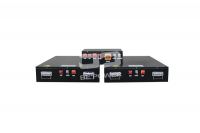
Application case:76.8V 420Ah 32.26Kwh
Product images:Specification: Product Introduction: This battery system is a customized product with two battery boxes and one PDU to maximize the use of space on the customer's vehicle and balance the weight of the vehicle. It’s fully certificated and in mass delivery; Company Introduction: Be Power is committed to providing customers with high-quality and customized solutions;We are the number one Chinese battery supplier delivered to automotive OEM in Brazil.We offered battery for over 800K set HESS systems; Our battery systems are warmly welcomed in over 30 countries applied on electricTrucks,electric light vehicles,electric UTV, electric sweepers, container energy storage systems, 215Kwh commercial and industrial energy storage systems etc. With top-notch technical team in China we are providing the toughest technical and highest level safety products.
-
15
2024-05
Our super 100Ah cells have achieved significant performance improvements!
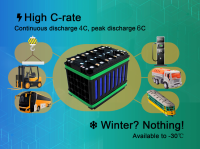
Recently, our 100Ah battery cells have achieved breakthroughs in charge/discharge rate and low-temperature performance. In terms of charging and discharging rate, the original 1C/3C 3000 cycles have been increased to the current 3C/3C 3000 cycles. The maximum charge discharge rate has been increased from 3C/4C to 4C/6C!It can still discharge 80% of its power in an environment of -30℃, this makes it very suitable for use in high latitude areas without the need for additional heating systems,。 It is also suitable for battery systems on hydrogen fuel cells, power sources for hybrid trucks, peak shaving energy storage systems, go karts, and other fields that have mandatory requirements for high magnification, high power, and ultra-low temperature.As a professional provider of energy storage systems and power battery systems, Bepower has a technical team with over ten years of experience in lithium battery technology, leading technology routes, and project implementation experience. For many years, Bepower's products have mainly focused on power and energy storage.
-
08
2024-05
Eight major differences between air cooling and liquid cooling in energy storage systems
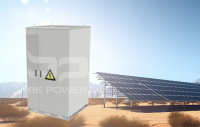
1.Different cooling principlesAir cooling is the process of removing heat through the flow of air, which lowers the surface temperature of the equipment. The advantages of air-cooled heat dissipation are simple structure and low cost, but its heat dissipation effect is greatly affected by factors such as environmental temperature and air circulation, and is not suitable for high-power and high-density equipment. Liquid cooling heat dissipation is the process of removing heat through liquid circulation, which lowers the internal temperature of the equipment. The advantages of liquid cooling are good heat dissipation effect and high stability, but its cost is high and it requires maintenance of the liquid circulation system.2. Different applicable scenarios Air cooling systems are suitable for energy storage systems of various scales and types, especially in outdoor environments with better applicability. It is currently the most widely used cooling technology, applied in industrial refrigeration, communication base stations, data centers, temperature control scenarios, etc., with relatively high technological maturity and reliability. Especially in low to medium power scenarios, air cooling remains the mainstream. Liquid cooling systems are also suitable for various scales and types of energy storage systems, especially for large-scale, high energy density energy storage projects. The advantages of battery packs are particularly evident in situations with high energy density, fast charging and discharging speeds, and large environmental temperature changes. 3. Different design complexityThe design of air-cooled energy storage systems is relatively simple, mainly involving the installation of heat dissipation fans and the design of air circulation paths. The core of air-cooled systems is the air conditioning and air ducts, which are used for cooling and exchanging heat; Liquid cooling design is usually more complex and requires consideration of issues such as the layout of the liquid circulation system, pump selection, coolant circulation, and maintenance. 4. Different heat dissipation effectsThe heat dissipation effect of air-cooled cooling is greatly affected by factors such as environmental temperature and air circulation, and generally cannot meet the heat dissipation needs of high-power equipment. The cooling effect of liquid cooling is better, which can effectively reduce the internal temperature of the equipment, improve the stability and lifespan of the equipment. 5. Different operating power consumptionThe composition of power consumption is different, and the main power consumption of air cooling is air conditioning+electrical compartment fan; The main power consumption of liquid cooling is the combination of liquid cooling units and electrical compartment fans (some manufacturers use whole machine liquid cooling). Under the same conditions and maintaining the same temperature, the power consumption of air cooling is higher than that of liquid cooling. 6. Different costs and maintenanceThe cost of air-cooled heat dissipation is relatively low and maintenance is simple. However, due to its limited heat dissipation effect, it may be necessary to increase the number of heat sinks or increase the fan speed to improve the heat dissipation effect, thereby increasing energy consumption and maintenance costs. The cost of liquid cooling is relatively high and requires maintenance of the liquid circulation system. However, due to its good heat dissipation effect and high stability, it can reduce equipment failure rate and maintenance costs. In the long run, its overall cost may be lower than that of air-cooled heat dissipation. 7. Different levels of noise and space occupancyThe noise generated by air-cooled cooling is relatively low and has a relatively small impact on the environment. But due to the need to install fans and heat sinks, it may take up some space. The noise generated by liquid cooling is relatively high and has a certain impact on the environment. However, due to its small radiator volume, it can effectively save space. In addition, liquid cooling can also reduce the impact of noise on the environment by optimizing the design and layout of the radiator. 8. Different safety and risk pointsThe safety of air-cooled heat dissipation is relatively high due to its simple structure and no risk of liquid leakage. But it is necessary to pay attention to the safety issues of the fan to prevent damage or overheating.The safety of liquid cooling is relatively low, and there are risks such as liquid leakage and corrosion. Therefore, the liquid cooling cooling system needs to use high-quality materials and strict sealing design to ensure safe operation. ConclusionAir cooling and liquid cooling are two commonly used heat dissipation methods in energy storage systems, each with its own advantages and disadvantages. When choosing a cooling method, it is necessary to comprehensively consider factors such as the actual power of the equipment, cooling requirements, and cost budget. With the development of technology, more efficient and low-cost new heat dissipation methods (such as the combination of air cooling and liquid cooling, immersion, etc.) may emerge in the future to provide guarantees for the stable operation of energy storage systems.
-
23
2024-04
Multiple LFP marine batteries have obtained CCS certification.
Recently, multiple types of lithium iron phosphate marine batteries have successfully passed the type approval by CCS China Classification Society, and have been awarded the type approval certificate by CCS China Classification Society. This marks a new stage of industrial application for the company's multiple LFP marine batteries in the shipbuilding industry.CCS China Classification Society is one of the world's eight major classification societies and an official member of the International Association of Classification Societies. It is the only authoritative professional organization in China engaged in ship classification inspection business. CCS certification standards are comprehensive and strict, serving as the official passport for enterprises to enter the shipbuilding industry, offshore facilities, and related industries, with high professionalism and authority. Our marine lithium iron phosphate batteries, including 280Ah, 150Ah, 105Ah, 100Ah, 85Ah, and other products, meet international market standards in terms of performance stability, safety, and environmental adaptability, and can be used in the global shipbuilding market.Bepower Energy is always committed to creating high-quality lithium battery power system products that are extremely safe and reliable in performance, bringing the best product application experience to the green shipping industry and promoting the high-quality development of the new energy electric shipping industry. Promoting zero carbon shipping is a consensus for the future development of the global shipping industry. "Green ships" represented by battery powered ships are the current and future main research and application promotion directions. Bepower will fully leverage its technological and product advantages in the field of batteries, provide safe, reliable, and efficient battery product solutions for green shipping, and use clean energy ships to help promote green and sustainable development in society.

-
12
2024-04
Sodium ion batteries are advancing!
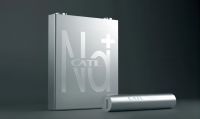
Currently, global energy and transportation transformation is entering deep waters, and exploring diversified battery systems has become a consensus in the industry. In the new energy competition, sodium ion batteries are becoming an important technological route after lithium-ion batteries.The standards for sodium batteries are gradually improving; The application side, such as energy storage, has achieved a certain shipment volume; the battery positive electrode material route focused on layered oxides in the first half of last year, and from the second half of the year, polyanion materials began to be laid out. As sodium battery technology continues to advance, its application areas are gradually expanding. At present, sodium batteries have been widely used in energy storage, electric vehicles and other fields. Our sodium batteries : In layered oxide systems, the energy density has surpassed 150Wh/kg with a cycle life of over 3000 cycles. In polyanion systems, a cycle life of over 6000 cycles have been achieved. Our sodiumion batteries have entered the commercialization stage in China. Currently, we have two sodium batteries to choose from, 150Ah and 3.05Ah
-
29
2024-03
Winning the bid for commercial energy storage systems of 200Mwh!
On March 25th, the announcement of the winning bidder for the 2024 User Side Energy Storage Equipment Framework Agreement Procurement of one China leading Water Resources and Electric Power (Group) officially released. Our 215kWH and 232kWh successfully won the bid with its high safety, long cycle, high-energy efficiency energy storage products, intelligent operation and maintenance solutions, as well as comprehensive service and after-sales capabilities! Our Industrial and commercial outdoor energy storage cabinet products with a total scale of 200MWh will be supplied! That's about 1000 units 215kWH C&I energy storage systems. With policy promotion and market demand growth, energy storage as an independent market entity participating in the electricity market will usher in unprecedented development opportunities. In 2023, we seized the opportunity in the energy storage market and entered the industrial and commercial energy storage track as a "product expert" and launched our 215/232Kwh liquid cooling industrial and commercial energy storage solutions, including the outdoor energy storage cabinet, energy storage container, Great E smart cloud platform, etc., which have been gained high trust from customers and impressive market results!

-
26
2024-03
Still Concern about the ROI?
Lithium-ion has a higher upfront cost, but can have a dramatic effect on the bottom line overtime.Our analysis of customer usage shows that lithium batteries save nearly 50% of the total cost per forklift compared to lead-acid batteries!Benefits by Li-ion system:√ Zero maintenance√ Lifespan increased 3 to 4 times√ Efficiency raised 30 to 50%

-
14
2024-03
Xinjiang Jiashi 600MWh grid connected! Refresh the record for the largest single scale photovoltaic storage project of PetroChina
On January 26th, the 600000 kilowatt photovoltaic power generation project and 150MW/600MWh supporting energy storage system constructed by PetroChina Tarim Oilfield in Kashi County, Xinjiang were successfully connected to the grid in one go! The 600000 kilowatt photovoltaic storage project in Tarim Oilfield is located in the barren desert area near Kezileboyi Township in Kashi County. It is the first desert power station in the region and a key project for the development of China Petroleum's new energy business. At the same time, it is also an important component of the layout of the Xinjiang Uyghur Autonomous Region to build a clean energy base with a capacity of tens of millions of kilowatts in southern Xinjiang!According to calculations, the 600000 kilowatt solar energy storage project in Jiashi County, Tarim Oilfield, China has an annual power generation of 1.04 billion kilowatt hours, which can meet the needs of 440000 households for one year, equivalent to replacing 312000 tons of standard coal, reducing 812000 tons of carbon dioxide emissions, 498 tons of sulfur dioxide emissions, and 456 tons of nitrogen oxides annually! Overall, it will help the Tarim Oilfield achieve an 8.1% increase in clean energy utilization and a 35% reduction in carbon reduction intensity, which is of great significance for ecological environment protection and regional economic development in Kashgar region. The 150MW/600MWh ultra large electrochemical energy storage power station, built in conjunction with the 600000 kilowatt photovoltaic power generation project, is a high-quality battery energy storage system integrated by China Petroleum Jichai Power Co., Ltd. The scale of this energy storage power station is among the top in China. After operation, it realizes valley time charging and energy storage, peak time discharge and peak regulation, which not only improves the stability and reliability of the power system, but also assists in peak shaving and valley filling of the power grid, energy conservation and efficiency enhancement, making the power supply in the surrounding areas of Kashgar cleaner, more economical, and efficient! As a professional provider of energy storage systems and power battery systems, Bepower has a technical team with over ten years of experience in lithium battery technology, leading technology routes, and project implementation experience. For many years, Bepower's products have mainly focused on power and energy storage. Mainstream power battery products include 72V battery systems suitable for light vehicles and UTVs, and 24V battery systems suitable for sweepers and lawn movers. Energy storage products include module/cluster/container ESS and have TUV IEC62619, UL1642, UL1973 certifications, with application in 50+countries/areas. In the future, Bepower will focus on the national "dual carbon" goals, promote green development, and balance economic, social, and environmental benefits!

-
28
2024-02
Analysis of The top 7 Misunderstandings About Light EV And Lithium-ion Batteries
With the continuous highlighting of global environmental issues and the diversification of people's travel methods, new energy vehicles are gradually attracting people's attention and pursuit.However, there are still many misunderstandings about light EV and lithium batteries.1. The battery aging is too fast and cannot be processed.For traditional fuel powered vehicles, as long as the engine, transmission, and steering functions can operate normally, the vehicle can continue to operate. But for pure electric vehicles, after reaching the number of charging and discharging cycles, the performance of the battery will deteriorate, making it difficult to reach the level of normal use.However, currently many pure electric vehicle manufacturers have implemented a policy of 3-year or 5-year buyback. If the service life of the battery exceeds its limit at a certain stage, it will also be recycled and reused. 2. Electric vehicles are unsafe and prone to catching fire.Carl, Vice President of the German Fire Protection Association, believes that "the degree of combustion in electric vehicles is not more severe or frequent than in gasoline or diesel vehicles, it is just different." ADAC's testing once again proves that the risk of electric vehicle ignition is as low as that of internal combustion engine vehicles.The German Fire Protection Association wrote in its current recommendation: "Certified electric vehicles have a significant fire risk compared to vehicles with other power systems (fuel propulsion)." Overfire tests also indicate that regardless of the type of power system, vehicles of the same size and type have similar combustion performance. In case of fire, the battery can also be extinguished with water.3. Lithium-ion batteries are very expensive.It’s imperative to think about long-term costs. Although lithium-ion batteries have a higher initial purchase price than lead-acid batteries, their cost per cycle is lower due to their longer lifespan, making them the most cost-effective solution in the long run.Bepower's lithium-ion batteries have extremely low internal resistance and the most efficient technology, which means less grid energy is wasted and saves 30% (charging and CO2 emissions) compared to lead-acid batteries. In the long run, with the decline of lithium carbonate, now comparing the prices of lithium-ion batteries and lead-acid batteries, purchasing a lithium battery with the same capacity only costs 1.5 times that of a lead-acid battery. Lithium batteries are cheaper in the long run. 4. The cost of repairing and maintaining light EV is very high.Electric vehicles have lower maintenance costs, do not require regular adjustments or oil changes, and require fewer parts to be replaced and maintained. Generally speaking, electric vehicle maintenance only requires testing of the three electrical components, chassis, and lighting; For major maintenance, in addition to minor maintenance projects, replacing the air conditioning filter and replacing steering fluid, transmission oil, coolant, and brake fluid every two years or 40000 kilometers are also included. The price depends on the model, usually up to two to three hundred yuan. Of course, if it is a high-end model like Tesla, it will cost thousands of yuan, which is much cheaper than gasoline cars. 5. Lithium-ion batteries are not as stable as lead-acid batteries.Lithium-ion batteries are safer than traditional lead-acid batteries. Although the energy density is higher than that of lead-acid batteries, Bepower lithium-ion batteries have multi-level safety systems such as cells, modules, and casings, as well as a battery management system (BMS) with comprehensive protection functions. BMS protects against overload, overcharge, deep discharge, and overcurrent.6. Light EV has poor power performance.With the gradual standardization of the pure electric vehicle market, the inferior products that used to ride the dividends have been eliminated by the market. The performance of pure electric vehicles nowadays is incomparable to fuel powered models in the same price range. For example, models such as GAC Trumpchi Aion LX, BYD Tang EV, Tengshi X, and Tesla Model have achieved or even surpassed performance cars in the same price range. Even for entry-level compact pure electric vehicles priced at over 100000 yuan, their electric motor power can be comparable to some mainstream 2.0T low-power engines, and with the fast response characteristics of the electric motor, the actual driving pleasure is even better than them. 7. Lithium-ion batteries are not suitable for harsh environments.Through extensive testing, we have found that lithium-ion batteries perform better than lead-acid batteries in rough surface environments, high-usage environments, low temperatures, and most other environments where lead-acid batteries have difficulty or simply fail to perform. Depending on the application and use, lithium-ion batteries are available. Since the permissible operating and charging temperatures depend on each specific lithium battery pack, Bepower provides data sheets and user manuals specifying the exact operating conditions for each battery.